On a rainy weeknight I needed a hearty but unfussy dinner, so I developed this one pot creamy vegetable soup to deliver straight-from-the-pot comfort without a mess of pans. The one pot creamy vegetable soup comes together in a single Dutch oven, starts with sautéed aromatics, and finishes silky and scoopable—perfect for busy cooks who want practical storage and reheating guidance.
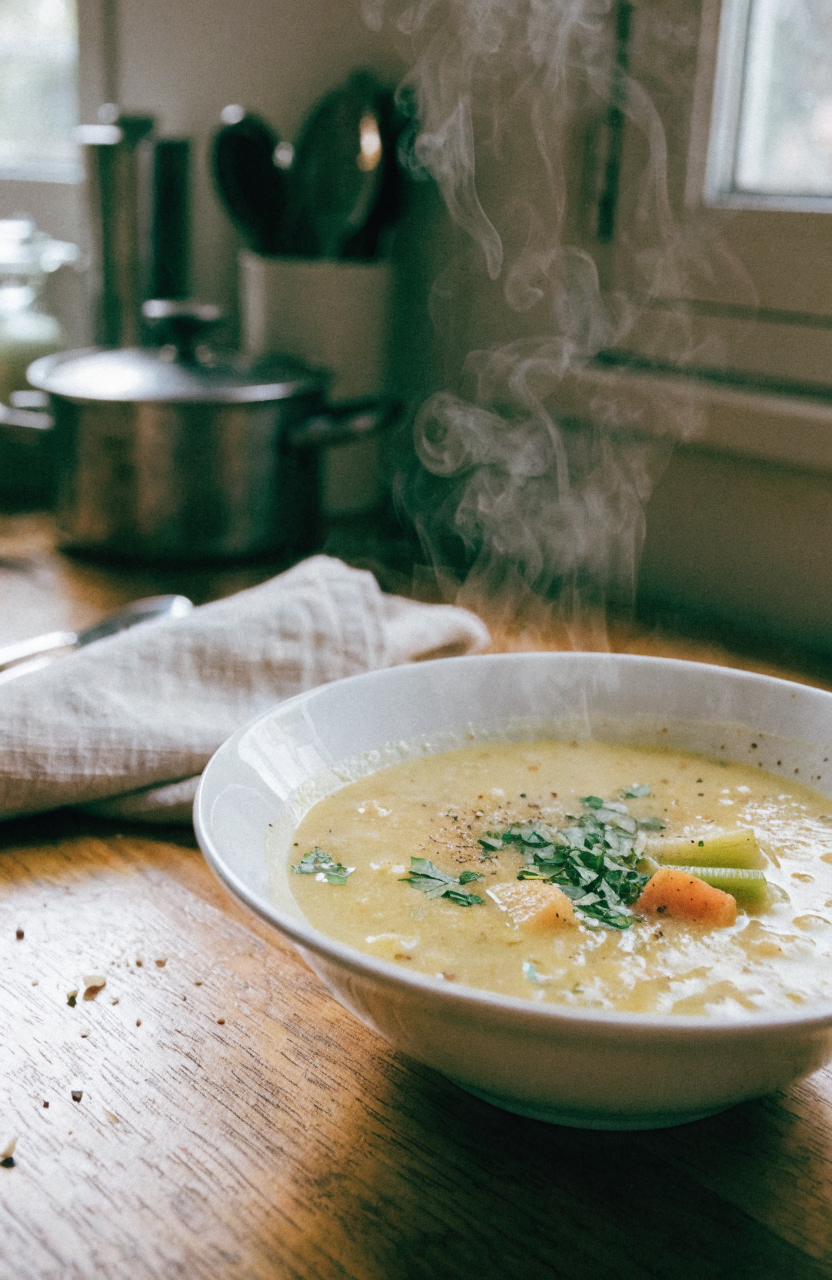
Why this one pot creamy vegetable soup works
The key technique is controlled moisture and staged blending. Vegetables like potatoes and carrots release starch and water differently; if everything simmers until falling apart, you get a thin, grainy finish after blending and chilling. I tested a few versions and found the most reliable approach is to sauté aromatics first, add firmer vegetables with just enough stock to cover, simmer until tender but not mushy, then remove a third of the pot for chunky texture before finishing the rest into a creamy base.
During testing I also learned that adding dairy too early can lead to separation. What made the final version work better was tempering: I ladled hot soup into the cream and milk to equalize temperature before stirring it back into the pot off the heat. The off-heat blending step—briefly blitzing with an immersion blender—keeps the soup velvety without overheating the dairy.
Key takeaways
- Sauté aromatics first for depth of flavor.
- Reserve some chunky vegetables before pureeing for texture contrast.
- Temper dairy off heat to avoid curdling and keep the soup stable when chilled and reheated.
Ingredients you’ll need and what to substitute
This recipe uses common grocery ingredients so a busy cook can pick everything up at a single run. I rely on yellow onions for sweetness, celery and carrots for classic mirepoix balance, and Yukon Gold potatoes for creaminess—Yukon Golds break down slightly and add body when blended, but other starchy potatoes will work with a slightly longer simmer and extra straining. If you prefer fewer carbs, swap half the potato for additional cauliflower florets; cauliflower adds bulk and blends smooth but yields a lighter mouthfeel.
Vegetable broth provides the savory backbone; low-sodium broth lets you control salt. For a touch of richness without heavy cream, I use a 3:1 ratio of whole milk to light cream—this keeps it creamy while reducing fat. For a dairy-free alternative, use unsweetened oat or cashew milk plus 2 tablespoons of neutral oil to mimic the mouthfeel, and omit the tempering warning since plant milks tolerate heat differently.
Two practical substitutions: use frozen mixed vegetables (peas, corn, green beans) added near the end instead of fresh if you want speed, or add a can of white beans for extra fiber and protein—rinse and add them after blending so they stay intact. If fresh herbs aren’t available, 1 teaspoon dried thyme replaces a tablespoon of fresh thyme.
Equipment
You only need a few kitchen basics: a 5 to 6-quart Dutch oven or heavy-bottomed pot so the vegetables simmer evenly without scorching; an immersion blender for quick, one-pot pureeing (a blender works too but requires careful transfers); a wooden spoon and a ladle. If you don’t have an immersion blender, use a high-powered blender and cool the soup slightly before blending in batches to avoid steam bursts.
How to make one pot creamy vegetable soup
Prepare the base
Heat 2 tablespoons of olive oil in a 5- to 6-quart Dutch oven over medium heat. Add 1 medium diced yellow onion, 2 ribs celery diced, and 2 medium carrots peeled and diced; sauté for 6–8 minutes until the onion is translucent and the vegetables start to soften. Stir in 3 garlic cloves minced and 1 tablespoon fresh thyme leaves and cook 30 seconds until fragrant. The part that matters here is taking the edge off the raw garlic so it mellows into the broth.
Simmer the vegetables
Add 1 pound Yukon Gold potatoes, peeled and cut into 3/4-inch pieces, and 4 cups low-sodium vegetable broth—just enough to cover the vegetables. Bring to a gentle simmer, cover partially, and cook for 12–15 minutes until the potatoes are fork-tender but not falling apart. Check a potato piece: it should yield to the fork and still hold shape. Cooking to this stage preserves some texture for the chunky reserve and prevents an overly starchy puree.
Reserve texture and blend
Use a slotted spoon to remove about 2 cups of the cooked vegetable mixture into a bowl and set aside; this creates the chunky component. Keep the remaining soup in the pot and add 1 cup cauliflower florets if using for extra body. With an immersion blender, pulse the remaining soup until smooth but still warm; if using a countertop blender, transfer in batches and blend until smooth, returning the soup to the pot and keeping it on very low heat.
Temper dairy and finish
Off the heat, stir together 1 cup whole milk and 1/3 cup light cream in a heatproof measuring cup. Ladle 1 cup of the hot pureed soup into the milk mixture while whisking to warm it (tempering). Then pour the warmed dairy back into the pot and stir gently. Return the pot to the lowest heat for 2–3 minutes—do not boil—to bring everything together. Stir in the reserved chunky vegetables, 1/2 cup frozen peas (optional), and 2 tablespoons chopped fresh parsley. Taste and season with 1 to 1 1/2 teaspoons kosher salt and 1/4 teaspoon black pepper, adjusting to your preference.
Things I learned the hard way
- If you boil after adding dairy the soup can separate—temper the dairy and avoid boiling.
- Creamy soup can become thin if too much stock is added early; start with stock to cover the veg and add more later if needed.
- Blending at full heat can scorch the bottom—turn heat to low or remove from heat before blitzing.
- The first time I pureed everything, the soup turned gluey from overworked potato starch; reserving chunky vegetables fixed the texture and made the bowl more interesting.
- Frozen vegetables should be added near the end; if added too early they release water and dilute flavor.
- Doubling the recipe requires a larger pot; don’t cram more than two-thirds full to avoid boil-over while blending.
Variations to try
Roasted root vegetable version: Roast chopped carrots, parsnips, and potatoes at 425°F for 25–30 minutes with oil and salt, then add roasted veg and 3 cups broth to the pot, simmer briefly, and proceed with blending for a deeper caramelized flavor. Timing: reduce initial sauté to 3 minutes because the veg are already cooked.
Creamy tomato-vegetable: Add 1 cup canned crushed tomatoes with the broth and reduce milk to 3/4 cup; the slight acidity brightens the soup—finish with a teaspoon sugar if tomatoes taste too sharp.
Herby lemon finish: Stir in 1 tablespoon lemon juice and 1 tablespoon chopped dill instead of parsley at the end for a fresher finish; no timing changes required.
Storage, freezing, and reheating
Refrigerator: Cool the soup to room temperature (no more than two hours at room temp), then refrigerate in airtight containers for up to 4 days. The texture will thicken in the fridge because the starch and fats firm up; before reheating, thin with 1/4 cup water or broth per 2 cups of soup if needed.
Freezing: This soup freezes well for up to 3 months. For best results, freeze without cream—use only 1 cup milk when making the batch, cool, transfer to freezer-safe containers leaving 1 inch headspace, and freeze. To reheat, thaw overnight in the refrigerator, warm gently in a pot over low heat, then temper in 1/3 cup light cream (or full cream if desired) off heat before stirring into the warmed soup.
Reheating: Reheat gently over low-medium heat, stirring frequently. Microwave reheating for single bowls works fine—heat in 60-second intervals, stir, and check temperature. Expect a minor loss of brightness; adjust seasoning and a squeeze of lemon if desired.
What to serve with one pot creamy vegetable soup
Chunky whole-grain bread or sourdough for dipping; a simple green salad dressed with lemon vinaigrette for contrast; toasted sandwich—cheddar on sourdough; roasted chickpeas for a crunchy topping; or a side of brown rice pilaf if you want extra substance. These pairings are practical and quick for busy weeknights.


Crock Pot Cheeseburger Soup
Ingredients
Equipment
Method
- Heat a 12-inch skillet over medium-high heat and add 1 tablespoon vegetable oil; add 1 pound ground beef and brown, breaking into pieces, until no longer pink, about 6–8 minutes. Season with 1/2 teaspoon salt and 1/4 teaspoon pepper while browning.
- Add 1 medium diced yellow onion to the skillet and cook 3–4 minutes until softened, then stir in 2 minced garlic cloves and cook 30–45 seconds until fragrant.
- Pour 1/2 cup beef broth into the hot skillet and scrape up browned bits with a wooden spoon, then transfer the beef, onions, garlic, and deglazing liquid to a 6-quart slow cooker.
- To the slow cooker, add 4 cups low-sodium beef broth, 2 cups 1/2-inch cubed russet potatoes, 1 cup diced carrots, 1 cup drained diced tomatoes, 1 tablespoon Worcestershire sauce, 1 teaspoon Dijon mustard, 1 teaspoon onion powder, and 1/2 teaspoon smoked paprika; stir to combine.
- Cover and cook on LOW for 6–8 hours or on HIGH for 3–4 hours, until potatoes are tender but not falling apart.
- About 20 minutes before serving, stir in 1 cup half-and-half, then add 2 cups shredded sharp cheddar cheese a handful at a time, stirring until fully melted and smooth; turn the slow cooker off and let the soup rest for 5 minutes.
- Taste and adjust salt and pepper as needed, ladle into bowls, and garnish with sliced green onions.
- If the soup is too thick after refrigeration or freezing, thin with a little hot broth when reheating.
Notes
Frequently asked questions
Can I make this soup ahead? Yes. Make the full soup up to the point before adding cream, cool, and refrigerate for up to 2 days; finish by gently reheating and tempering in the cream before serving. This keeps the milk from overheating and separates.
Will the soup separate when refrigerated? It may firm up and look thicker because fats solidify; it should not separate if you tempered the dairy correctly. Reheat gently and stir to return it to a silky texture.
Can I use an immersion blender for the whole pot? Yes—immersion blenders are ideal for one-pot soups and reduce transfers. Pulse gently and avoid holding the blender against the bottom to prevent scalding.
Is this recipe suitable for freezing? Yes—freeze without cream for best texture. Thaw overnight and finish with cream when reheating for the freshest result.
How can I make it vegan? Use unsweetened oat or cashew milk and 2 tablespoons neutral oil instead of cream, and use vegan butter or more olive oil for the sauté. Taste and adjust seasoning since plant milks are milder.
Closing
This one pot creamy vegetable soup gives predictable, silky results because of the tempering and reserved texture trick—it’s the kind of practical, stay-in-your-repertoire recipe I reach for when I want simple cooking and reliable leftovers.

Leave a Reply