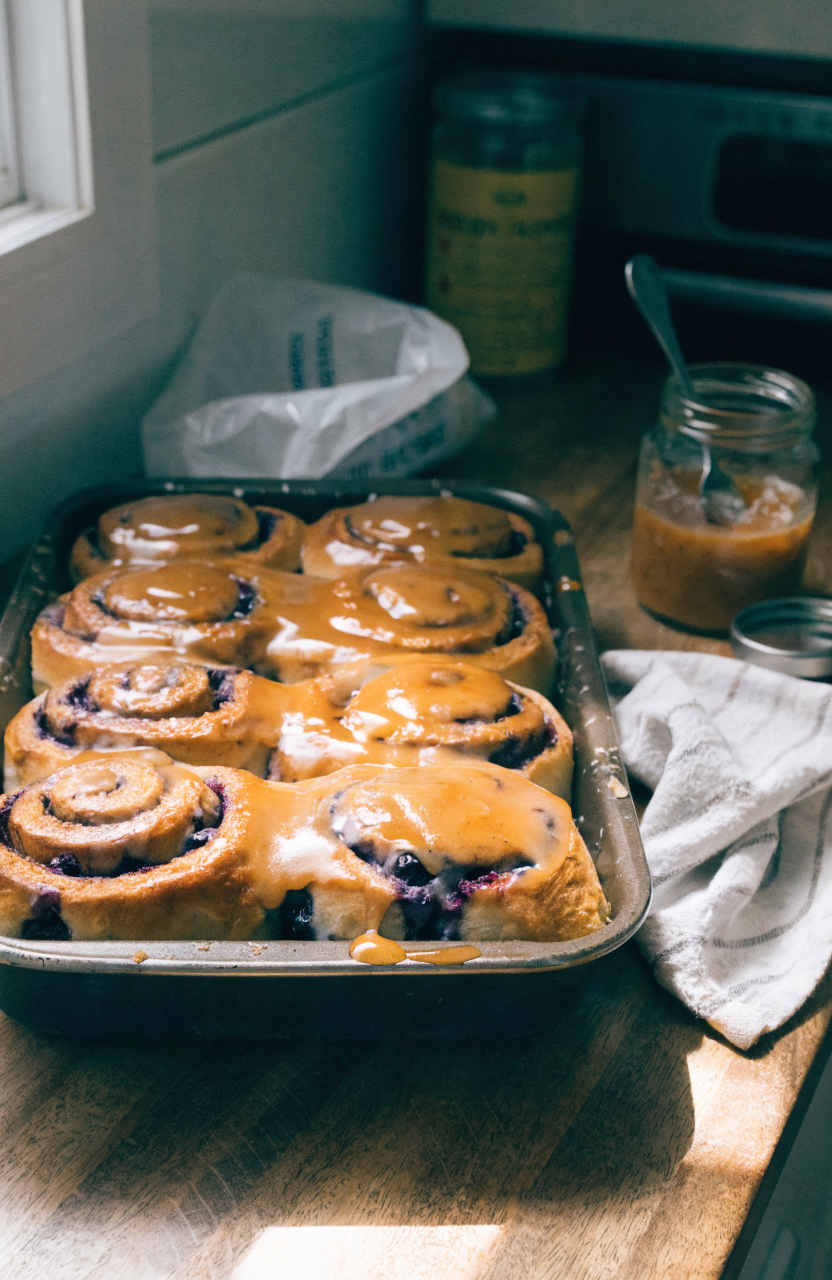
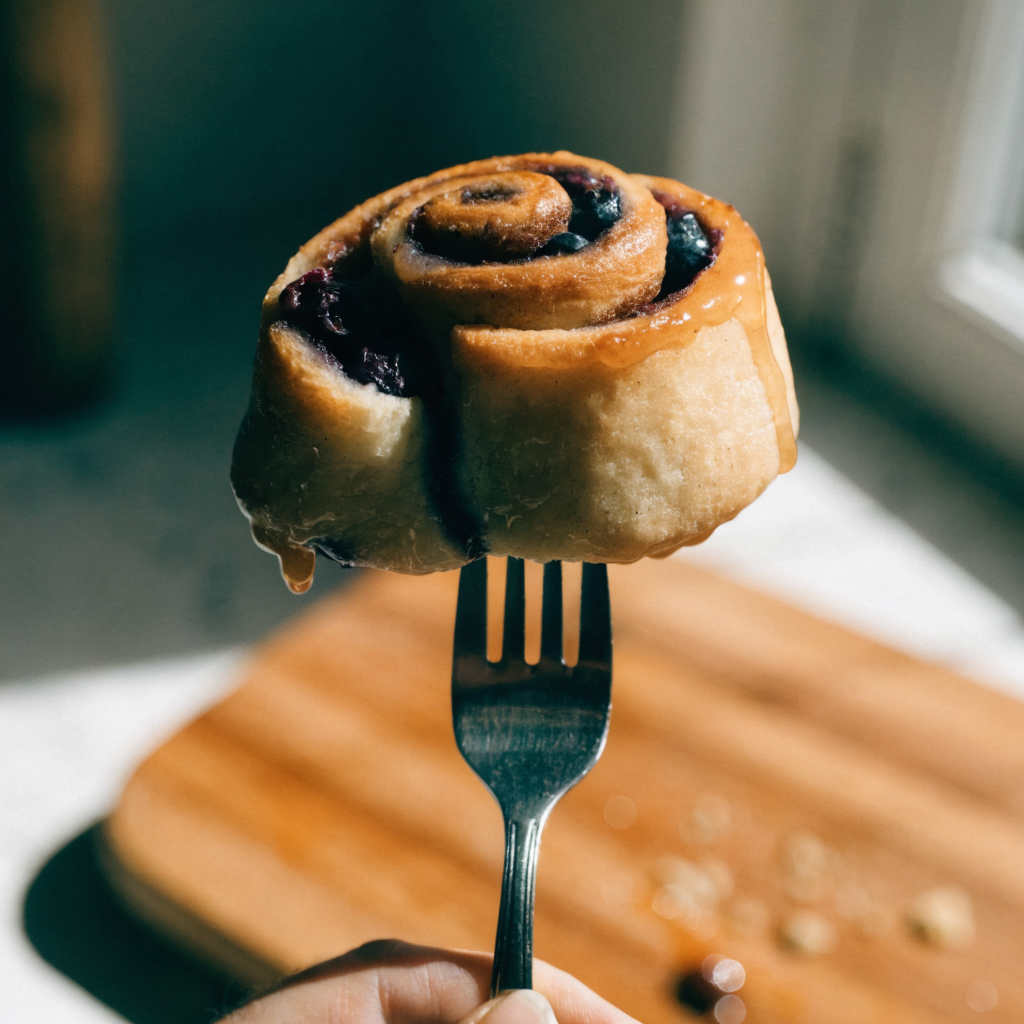
I still remember the first test batch of these blueberry cinnamon rolls: the dough was airy but the fruit sank and made the centers soggy. That experience led me to refine the dough hydration and the folding method so the blueberry filling stays in the spiral while the roll bakes evenly. These blueberry cinnamon rolls have a soft, slightly pull-apart crumb, a gently spiced cinnamon ribbon, and pockets of whole berries that burst without turning the center runny.
Why this blueberry cinnamon rolls works
What makes these blueberry cinnamon rolls reliable is the dough-to-filling balance and the timing. I developed a slightly lean enriched dough—enough butter and egg to make a tender crumb but not so rich that the rolls collapse during baking. The filling is a loose jam-like mix with a light cornstarch thickener so the berries keep their shape and don’t leak into the dough. During testing I switched from dumping fresh berries directly on the dough to folding them into a reduced filling; that kept the swirls distinct and prevented sogginess.
Key technique: roll the dough evenly and chill briefly if it feels sticky; the short chill firms the filling and makes clean slices. Key ratio: roughly 3 cups of flour to 1 cup of milk gives a pliable, slightly tacky dough that yields a tender interior after baking. The method solves common problems—dense rolls, collapsed centers, or runny filling—by controlling hydration, using a light thickener, and giving the rolls a short second rise in a snug pan.
Key takeaways
- Make a slightly lean enriched dough for a tender but stable crumb.
- Reduce the blueberry filling and thicken with cornstarch so berries burst without leaking.
- Chill the filled log briefly before slicing to preserve swirl shape and avoid soggy centers.
Ingredients you’ll need and what to substitute
I keep the ingredient list focused and pantry-friendly because the target is busy home cooks. You’ll need all-purpose flour, milk, yeast, a little sugar, butter, one egg, and fresh or thawed frozen blueberries. The milk can be whole or 2%—whole milk gives a slightly richer dough. If you prefer plant milk, use an unsweetened full-fat option and add 1 tablespoon extra butter for richness.
Blueberries: fresh gives the cleanest texture, but frozen blueberries work well if fully thawed and drained; toss thawed berries in 1 teaspoon cornstarch before stirring into the filling to absorb excess juice. Sugar: use granulated sugar as directed; brown sugar will add a deeper caramel note but also more moisture. Butter: use unsalted butter and add a pinch of salt as listed; if you only have salted butter, reduce added salt by 1/4 teaspoon.
Cornstarch: small amounts go a long way in stabilizing the filling—do not skip it if using frozen berries. Yeast: active dry or instant both work; if using active dry, proof it in warm milk for 5–8 minutes. I provide substitution notes in the recipe card for these swaps.
Equipment
Essential equipment is minimal and standard for home kitchens: a 9×13-inch baking pan gives a snug fit that encourages straight sides and even rise; a stand mixer with a dough hook makes the dough effortless, but you can knead by hand in about 10 minutes of elbow grease; a rolling pin and sharp serrated knife or dental floss for clean slices. A digital thermometer is helpful to check milk temperature (around 100–110°F) and to confirm rolls are done if you want a visual plus temperature cue.
How to make blueberry cinnamon rolls
Make the dough and first rise
Warm the milk to about 100–110°F and sprinkle the yeast and 1 teaspoon of sugar over it if using active dry yeast; let it bloom 5–8 minutes. In the bowl of a stand mixer combine 3 cups all-purpose flour, 2 tablespoons sugar, and 1 teaspoon salt. Add the yeast-milk (or instant yeast mixed directly into the dry ingredients with warm milk), 1 beaten egg, and 3 tablespoons of softened unsalted butter. Mix with the dough hook on low until the ingredients come together, then increase speed to medium and knead 5–7 minutes until the dough is smooth and slightly tacky. If the dough is very sticky, add up to 1/4 cup more flour in tablespoon increments; avoid over-flouring.
Shape the dough into a ball, place it in a lightly oiled bowl, cover with plastic wrap or a clean towel, and let it rise until doubled—about 60 to 90 minutes at room temperature. A cooler kitchen will take longer. The dough should feel pillowy and yield when gently poked.
Prepare the filling and assemble
While the dough rises, make the blueberry filling. In a small saucepan combine 2 cups fresh or thawed drained blueberries, 1/3 cup granulated sugar, 1 tablespoon lemon juice, 1/2 teaspoon cinnamon, and 1 tablespoon water. Bring to a simmer over medium heat, stirring occasionally. In a small bowl mix 1 teaspoon cornstarch with 1 teaspoon cold water, then whisk it into the simmering berries and cook briefly until the mixture thickens and glossy, about 1–2 minutes. Let the filling cool to warm or room temperature.
Turn the risen dough onto a lightly floured surface and roll it into a 12×16-inch rectangle. Spread 3 tablespoons softened butter evenly over the dough, leaving a 1/2-inch border on one long edge. Sprinkle 1/2 cup brown sugar mixed with 1 tablespoon cinnamon over the butter. Spoon the cooled blueberry filling evenly over the sugar, leaving that clean border. Starting from the long edge opposite the border, roll the dough into a tight log. Pinch the seam closed and tuck the ends under.
Chill, slice, and second rise
Place the log seam-side down on a baking sheet and chill in the refrigerator for 20–30 minutes; the short chill firms the filling and makes slicing clean rounds. After chilling, use a sharp serrated knife or unflavored dental floss to slice the log into 12 equal rolls (about 1 to 1 1/4 inches each). Arrange the rolls in a greased 9×13-inch pan in three rows of four, leaving a little space so they can rise into each other. Cover loosely and let rise until puffy, about 30–45 minutes. Meanwhile preheat the oven to 375°F.
Bake and finish
Bake the rolls at 375°F for 18–22 minutes until golden on top and the centers read about 190°F if you check with a thermometer; the centers should be set but still soft. If the tops brown too quickly, tent with foil for the last 5 minutes. Let the rolls cool for 10 minutes in the pan while you make a simple glaze: whisk 1 cup powdered sugar with 2–3 tablespoons milk and 1/2 teaspoon vanilla until pourable. Drizzle glaze over warm rolls and serve. The glaze soaks in slightly for a tender top while keeping the swirls visible.
Things I learned the hard way
- Avoid adding raw berries directly to the dough—fresh berries can release too much juice during baking and make the center soggy; reducing them into a thickened filling solved that.
- If your dough is overly sticky after mixing, resist adding lots of flour; chill 10–15 minutes and knead briefly—temperature affects tackiness more than hydration.
- Slicing without chilling produced ragged spirals; a 20–30 minute fridge chill firms the log for clean cuts.
- Use a snug pan (9×13) so rolls support each other during the second rise and bake—loose pans can spread and flatten the swirls.
- Frozen blueberries need extra cornstarch and thorough draining to avoid watery filling; reserve any berry juices and reduce them until glossy if you want to use them.
Variations to try
- Lemon-Blueberry: add 1 tablespoon lemon zest to the dough and increase lemon juice in the filling to 2 tablespoons; bake the same time but consider a thinner lemon glaze.
- Cream cheese swirl: spread 4 ounces softened cream cheese mixed with 2 tablespoons sugar over the butter before adding blueberries; reduce the berry filling by 2 tablespoons to balance moisture.
- Whole-wheat touch: replace 1 cup of the flour with whole-wheat pastry flour; expect a slightly denser crumb and add 1–2 tablespoons more milk if the dough is stiff.
Storage, freezing, and reheating
Refrigerate leftover rolls in an airtight container for up to 4 days. The texture will firm but stay tender; reheat individual rolls in the microwave for 20–30 seconds or warm the whole pan at 300°F for 10–12 minutes covered with foil. These rolls freeze well: cool completely, wrap the pan tightly in plastic wrap and foil or freeze individual wrapped rolls for up to 3 months. To thaw, move to the refrigerator overnight, then reheat as above. Note: glazing before freezing makes the surface a touch sticky after thawing; for the best texture, freeze unglazed and glaze after reheating.
What to serve with blueberry cinnamon rolls
These rolls work for weekend brunch or breakfast-for-dinner. Try serving with: a light scrambled egg dish, a bowl of mixed fruit to contrast sweetness, or a simple hot coffee or tea. For a heartier brunch pair with yogurt bowls or savory breakfast potatoes.

Blueberry Cinnamon Rolls
Ingredients
Equipment
Method
- Warm milk to about 100–110°F and add to the mixer bowl with 1 packet instant yeast, 2 tablespoons sugar, 3 cups flour, and 1 teaspoon salt; add the beaten egg and 3 tablespoons softened butter and mix with a dough hook on low until combined, then knead 5–7 minutes until smooth and slightly tacky; add up to 1/4 cup flour only if very sticky.
- Place dough in a lightly oiled bowl, cover, and let rise until doubled, about 60–90 minutes at room temperature.
- In a small saucepan combine 2 cups blueberries, 1/3 cup sugar, 1 tablespoon lemon juice, 1/2 teaspoon cinnamon, and 1 tablespoon water; simmer until berries begin to soften, then whisk 1 teaspoon cornstarch mixed with 1 teaspoon cold water into the pan and cook 1–2 minutes until glossy; cool to warm or room temperature.
- Roll risen dough into a 12×16-inch rectangle on a lightly floured surface; spread 3 tablespoons softened butter, sprinkle with brown sugar mixed with 1 tablespoon cinnamon, then spoon blueberry filling evenly over the sugar, leaving a 1/2-inch border.
- Roll the dough tightly from the long side into a log, pinch the seam to seal, and tuck the ends under; chill the log in the refrigerator 20–30 minutes to firm for slicing.
- Preheat oven to 375°F. Slice the chilled log into 12 equal rolls using a serrated knife or dental floss and place them in a greased 9×13-inch pan in three rows of four; cover loosely and let rise 30–45 minutes until puffy.
- Bake at 375°F for 18–22 minutes until golden and centers are set (about 190°F internal if measured); tent with foil if tops brown too fast.
- Whisk 1 cup powdered sugar with 2–3 tablespoons milk and 1/2 teaspoon vanilla until smooth; drizzle over warm rolls and serve. Cool remaining rolls before storing.
Notes
Frequently asked questions
Can I use frozen blueberries? Yes—use fully thawed and well-drained frozen blueberries, toss them with 1 teaspoon cornstarch, and reduce any excess juice by simmering briefly before adding to the filling. This prevents a runny center.
How do I keep the centers from being raw? Follow the recommended bake time and check for a center temperature near 190°F; if the tops brown too fast, tent with foil and continue baking until set. Also slicing after chilling keeps the spiral intact so heat reaches the center evenly.
Can I make these the night before? Yes—assemble, slice, and arrange the rolls in the pan, then cover and refrigerate overnight; let them sit at room temperature for 30 minutes before baking and add 5–8 minutes to the bake time if still cool.
Why did my rolls lose their swirl definition? Overstretching when rolling tight or slicing a warm log can smear the filling. Chill the log 20–30 minutes before slicing and roll evenly without pressing too hard.
Can I freeze unbaked rolls? Yes—slice and arrange in the pan, cover tightly, and freeze. Bake from frozen but add 10–15 minutes to the bake time and keep the oven at 375°F, checking for doneness by visual cues and an internal temperature check.
Closing
These blueberry cinnamon rolls balance a tender dough with a thickened fruit swirl that stands up to chilling and reheating—perfect for a relaxed weekend brunch or a make-ahead treat for mornings when time is short. Warm a roll briefly before serving and glaze just before eating for the best texture and burst of berry flavor.

Leave a Reply